
The squat is one of the most fundamental movements in fitness, but it is also one of the most technically demanding.
At first glance, the exercise appears simple—you bend your knees and return to standing—but anyone who has attempted loaded squats knows that proper form requires mobility, coordination, and strength across multiple joints and muscle groups.
Fitness professionals often classify the squat as a knee-dominant movement, but it engages the hips, core, back, and even ankle mobility.
This makes it one of the six fundamental movement patterns that should be present in any well-rounded program.
One of the most common mistakes people make with squats is focusing solely on adding weight without improving range of motion.
Limited hip or ankle mobility can lead to compensations that reduce efficiency and increase the risk of injury.
Incorporating targeted mobility work, such as hip 90/90 transitions, pigeon stretches, or simple child’s pose variations, helps prepare the joints to move smoothly through the squat pattern.
Another valuable approach is weighted stretching, which combines static positions with light external resistance.
For example, sitting in a pancake stretch with small weights on the knees can gently open the hips, while a forward fold with a light dumbbell in hand can release tight hamstrings and the posterior chain.
These techniques should be used after workouts or on rest days, as long-duration stretches are less effective before explosive movements.
Over time, this practice not only improves flexibility but also conditions the body to remain stable at greater depths.
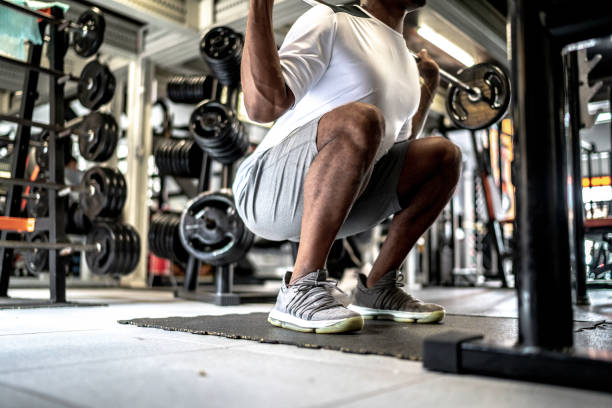
Finally, isometric squat holds provide an accessible way to build comfort and control at the bottom of the squat.
By setting a timer for a minute and gradually increasing depth and duration, lifters can improve stability and proprioception.
Holding tension at the lowest point teaches the body how to brace effectively and makes transitioning into loaded squats safer and smoother.
Many strength coaches recommend incorporating holds into accessory work to help build the foundations for heavier lifts.
What these three practices—mobility drills, weighted stretching, and isometric holds—share in common is their focus on the “small stuff.”
Improving the finer details of flexibility, joint health, and positional awareness sets the stage for long-term progress.
Without them, chasing heavier weights becomes putting the cart before the horse.
The squat may never truly be simple, but with attention to technique and supportive practices, it can be both safer and more powerful.
Whether your goal is building strength, athletic performance, or simply moving better in daily life, these strategies can transform how you approach one of the most essential exercises.