
The squat is one of the most foundational movements in strength training, yet it’s also one of the most frequently misunderstood.
At a glance, it looks simple: bend the knees, drop your hips, stand back up.
But anyone who’s loaded a barbell across their back knows the squat demands far more than that.
It’s a full-body movement that hinges on coordination, joint mobility, muscular strength, and motor control.
That’s why coaches often refer to the squat as a “movement pattern,” not just an exercise.
According to the strength training framework that includes vertical and horizontal pushes and pulls, knee and hip dominant movements, and core engagement, the squat remains one of the six (or arguably seven) essential patterns that form the basis of a well-rounded program.
Whether you favor front squats, goblet squats, hack squats, or the traditional barbell back squat, the principle remains the same: better movement equals better results.
If your squat has hit a plateau, or you’re noticing discomfort or tightness in your hips, knees, or ankles, consider integrating the following three techniques to improve mobility, depth, and long-term performance.
First, prioritize hip health through daily mobility work.
Your hips are the cornerstone of your squat.
Tight or immobile hips limit depth and force your knees and lower back to compensate.
Mobility routines that include 90/90 hip switches, pigeon pose, and child’s pose can dramatically improve your squat mechanics and help prevent injury.
Second, explore the concept of weighted stretching.
This technique isn’t for beginners, but once you’re familiar with your movement patterns, it can accelerate progress.
Sitting in a pancake stretch with light weights on the knees or performing a forward fold while holding a five- to ten-pound plate can help lengthen chronically tight muscles in the hips, adductors, and hamstrings.
It’s important to do these movements after your training sessions or on rest days, since long static stretches before a lift can inhibit explosive strength.
As explained in this video by squat coach Jeff Nippard, combining passive and active stretching with progressive overload can meaningfully enhance mobility over time.
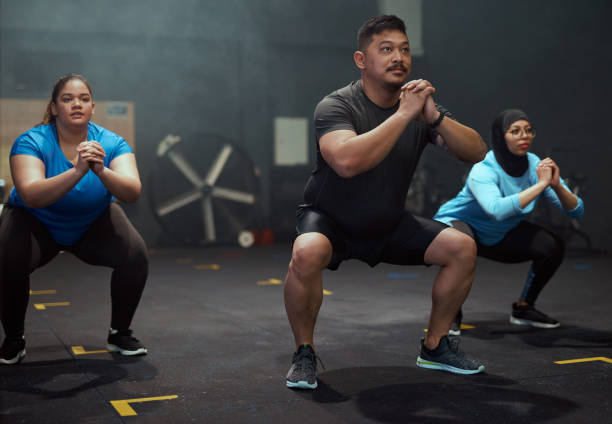
Finally, add isometric squat holds to your routine.
These low-intensity, high-reward drills help you build control, comfort, and strength at the bottom of your squat.
Set a timer and sit in your lowest controlled position for up to a minute at a time.
This approach not only strengthens the glutes, quads, and hip flexors, but also reinforces neuromuscular awareness in the deep squat position.
If your goal is to lift heavier, start by moving better.
Mobility and motor control may not be as flashy as stacking more plates on the bar, but they’re the foundation that strength is built upon.
By focusing on these smaller, targeted interventions, you’re setting your body up for safer, more effective gains in the long run.
Your squat isn’t just a movement—it’s a skill.
Train it like one.